Puppy development stages: milestones & growth charts

Summary
Puppies progress through neonatal, transitional, socialisation and juvenile stages with rapid changes in senses and behaviour. This guide outlines key milestones, safe socialisation windows and expectations for different ages. Use growth charts to track healthy weight and adjust feeding. Positive reinforcement, adequate exposure to varied people and experiences help build calm, resilient adult dogs.
The puppy development stages
The stages of puppy development are wondrous to behold. Your puppy will grow and gain independence each day as it passes through the key development stages and reaches important milestones.
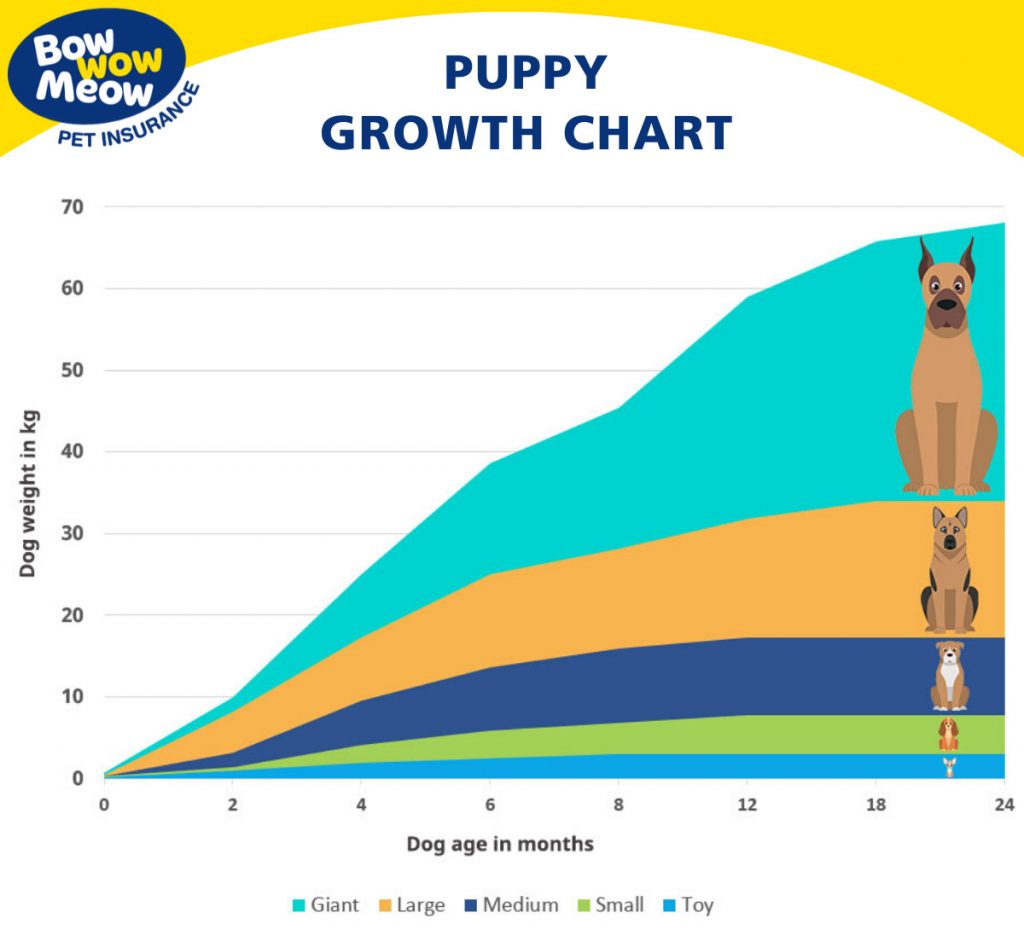
While all dogs pass through the same puppy stages in their early life, the final size of your puppy influences the rate of maturity. Small dog breeds develop more quickly and reach maturity at a younger age (Around 9-12 months) compared to larger breeds, who reach adulthood closer to 18 months (see our puppy growth chart below).
In this article we explore the various puppy development stages, looking not only at a puppy’s physical growth but also social and emotional maturation. Socialisation is an important aspect of your puppy’s growth and development, having a huge influence on your dog’s ability to live comfortably and happily in within a human family and environment. Socialisation includes becoming used to contact with different humans, other dogs and learning about the human environment.
Each of the puppy stages includes important milestones in your puppy’s journey from a helpless new-born to an independent adult. By knowing what to expect and when to expect it, you can be better prepared to deal with your puppy’s more challenging behaviours, understand what is age-appropriate, feel comforted that your puppy is developing normally and be aware if there is any reason for concern.

Read on for a detailed explanation of each puppy development stage, or jump ahead by selecting the appropriate section below:
- The Neonatal Period – 0 to 2 weeks
- The Transitional Period – 2 to 4 weeks
- The Socialisation Period – 4 to 12 weeks
- The Juvenile Period – 3 to 6 months
- Adolescence – 6 to 18 months
- Adult – all grown up
- Puppy growth chart
- Weight charts by breed size
Puppies are very adventurous and highly accident prone, and often end up hurting themselves whilst they are still growing. Their underdeveloped immune system means they are also vulnerable to getting infections and catching diseases.
Consider pet insurance to help protect you and your puppy from the start. Get your first 2 months cover free 2!
The Neonatal Period – 0 to 2 weeks
For the first two weeks of life, a puppy is considered a neonate or newborn. Puppies in the newborn puppy development stage are completely dependent on their mother. They are born blind, deaf and neurologically underdeveloped and spend most of the time sleeping or eating, and are stimulated to toilet by their mother licking their bottom area.
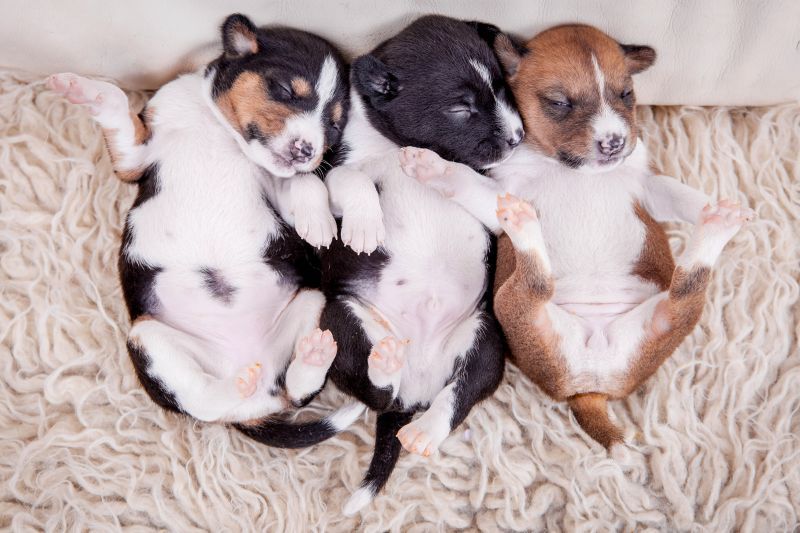
New-born puppy’s body
The first week
- Puppies are born fully furred
- They can touch and taste
- Their eyes and ears are closed so they cannot hear or see
- They can’t stand or support their body weight, but their front feet are strong, and they can pull themselves towards their mother
- They make tiny squeaking noises when they are cold, but are mostly silent
- They cannot regulate their own body temperature and need their mother for heat
- There is almost no difference in their brain activity when asleep and awake
- They grow rapidly and double their birth weight in the first week to ten days of life
The second week
- Their eyes start to open at around ten to fourteen days, although they can’t see very much yet; sometimes one eye opens before the other
- Their forelegs are getting much stronger
- They continue to grow rapidly, adding 5-10% of their body weight
New-born puppy’s socialisation
Socialisation in this initial stage is influenced by mum. The puppy will actively seek its mother – if separated from her, he will start to vocalise and crawl, swinging his head from side to side as he tries to find her. She is constantly attentive, only leaving her babies to eat or go to the toilet. If a puppy cries, mum responds by moving it towards her and licking it.
The breeder will slowly begin to handle the puppies to get them used to human contact. Studies have shown that handling and other interaction with a human carer during the new-born stage can lead to a quicker maturation of the puppy’s nervous system and enhance the development of its motor and problem-solving skills.
New-born puppy care tips
- Feeding: new-born puppies are only able to feed by suckling from their mother (or if not possible, a commercial milk substitute), and they need to have milk about every two hours.
- Toileting: the mother licks her puppies’ ano-genital regions to stimulate urinating and defecating and she keeps the sleeping area clean by eating their waste products.
- Deworming: the breeder deworms the puppies for the first time at the end of the second week.
The Transitional Period – 2 to 4 weeks
There is a lot happening during the second stage of puppy development, as the puppy transitions out of the neonate period. Brain development quickly ramps up, with a marked increase in brain activity. The puppy also begins to show its personality.

Puppy’s body
The third week:
- Puppies can stand, sit up and even start walking, taking their first wobbly steps by the end of this week
- They can wag their tails
- Their ear canals open and they start to respond to sound, showing a startle response to loud noises
- Their vision improves and they start to respond to light and movement
- They start to make proper dog sounds and may make their first attempt at barking
- They can regulate their body temperature more effectively
- They start to cut their first milk teeth in preparation for weaning, with the front teeth, canines and incisors coming through first
The fourth week:
- Puppies become much more active and stronger on their legs
- They start to move away from the sleeping area to urinate and defecate
- They may try to climb out of their pen or living area
- They can see quite well by now
- The back teeth start to come through
Puppy’s socialisation
Socialisation in the second puppy development stage is influenced by their litter mates. Puppies begin to interact with their siblings, even actively playing and play-fighting with each other. They start to practice using social signals, such as growling, pawing and tail wagging. Biting behaviour may occur, which helps to relieve the discomfort of teething.
In this period, puppies begin to exhibit signs of distress for reasons other than being cold or hungry. Separation from their litter mates, a new environment, or accidentally wandering too far from the nest will cause them to cry.
The puppies’ mother will start to spend more time relaxing away from the puppies. If she lives indoors, she may re-join the family for more of each day. She will gradually stop cleaning up after her puppies.
Puppy care tips
- Feeding: Toward the of their third week, puppies may have their first taste of puppy food and the breeder may have commenced weaning. By the end of the fourth week, puppies are usually getting quite a bit of their nourishment from puppy food. They can now lap water from a bowl. If the mother is allowed near the puppies after she has been fed, she may regurgitate her dinner for them. This is completely natural and normal.
- Toileting: Puppies begin to urinate and defecate naturally, away from the nesting area, without stimulation from their mother.
- Deworming: The breeder deworms the puppies for a second time.
The Socialisation Period – 4 to 12 weeks
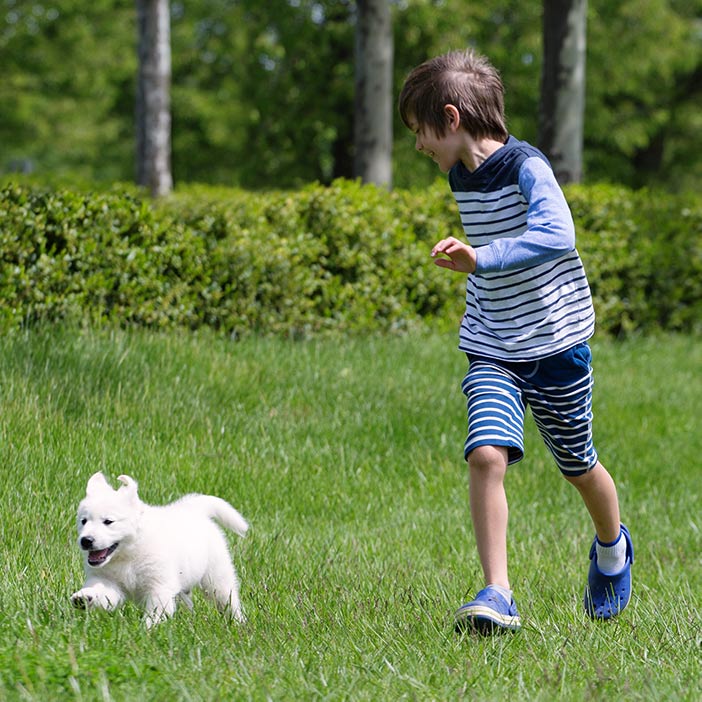
The third of the puppy stages is a truly wondrous period in which the puppy can now really run and play. It is probably the most significant period of the puppy’s young life and much of what he learns now will last throughout his lifetime. In this stage it’s incredibly important to socialise him by introducing him to other people and dogs, as well as new noises and environments.
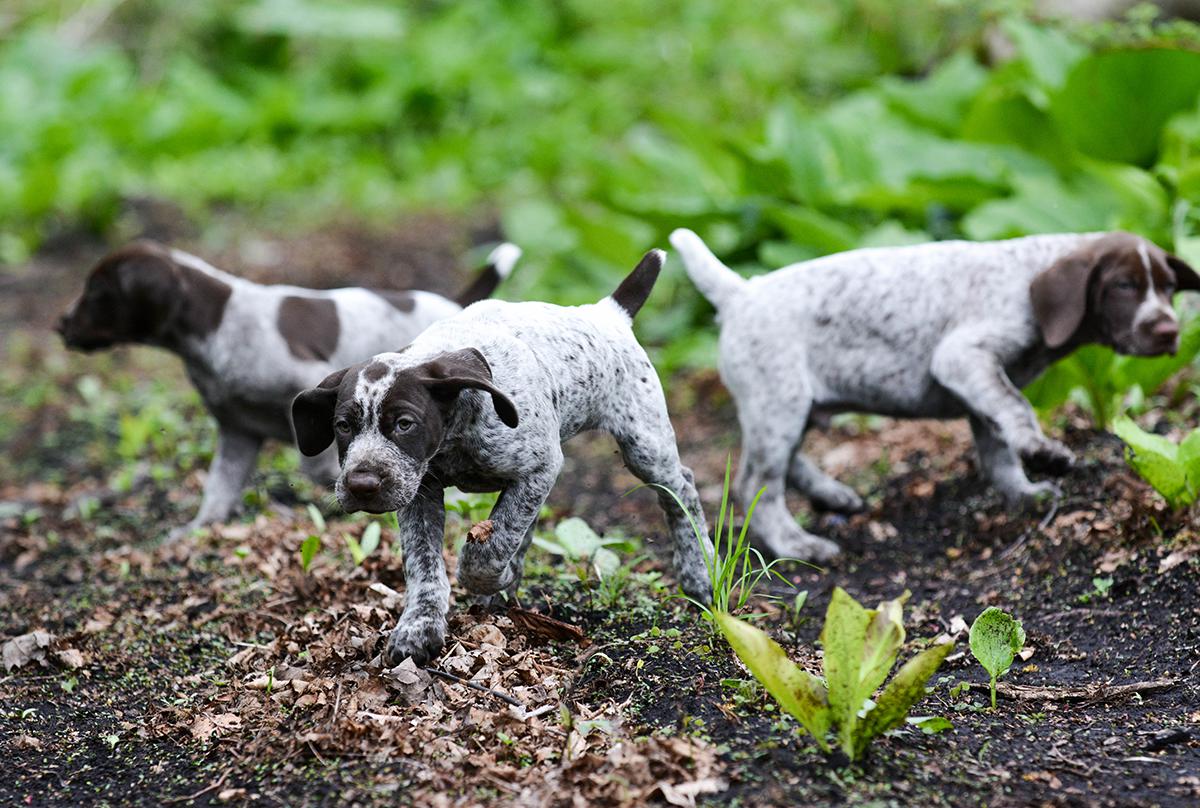
Puppy’s body
- By the fifth week, puppies can bark properly – some can be quite noisy at this age!
- From the sixth week onwards, a small breed puppy may gain around 140 grams per week in weight, whereas a large breed puppy may put on around 500 to 750g per week – weekly weighing is recommended (see puppy growth charts by breed size below)
- At eight weeks the puppy’s brain is ready to start soaking up information, making it the ideal time to start training
Puppy socialisation
As its name suggests, this puppy development stage is the critical time for learning socialisation skills – it is the time when puppies learn how to be dogs. They become familiar with all the species-specific behaviours, such as different body postures and vocalisations, that allow them to live and communicate with other dogs.
During the first half of this stage puppies will ideally still be with their mother and litter mates, and mum will educate her pups about discipline and dog-manners. She teaches them how to bite and what it feels like to be bitten, and they learn not to bite too hard. It is important for puppies to learn this lesson when they are young, so that they understand appropriate play with humans and other dogs.
The window for optimal socialisation closes at around three months, and up to this age is the time when your puppy will most readily accept and adapt to new experiences. Good breeders start socialisation before puppies go home with their new owners (typically at around eight weeks), introducing them to lots of new experiences so that they won’t be afraid of them later. Positive interactions with people from weeks five to seven will play a large role in how puppies continue to interact.
Expert advice from Dr Felicia:
It can be very helpful in this sensitive socialisation period to introduce your pup to all kinds of people – women, men, young children, babies. Where possible it is important to allow your puppy to interact with adult dogs as well as puppies so they can learn the appropriate way to engage with them. Finally, this is also a good time to introduce them to daily routines of brushing, having their feet held and teeth brushing. Positive visits to the vet and groomer at this time can also help your pup feel that these are safe places for them.
During the second half of this puppy stage, when the puppy is in his new home, it is essential that he is exposed to many of the people, dogs, objects, sounds and environments he may encounter in later life, including being left alone for short periods, visiting the vet and travelling in the car. Puppies need some help with this process because at around three months old, they start to become nervous and fearful of unfamiliar people and events. As the owner, this is the time when you can have the greatest impact on your puppy’s social development.
Read more about Puppy socialisation and its importance.
Puppy training
At eight weeks, your puppy’s brain is ready to start soaking up information, making this the ideal time to get puppy training under way. Train your puppy to be happy with new encounters. From weeks eight to ten, your pup will go through a normal “fear” period that can be helped with training that is positive and encouraging. Expose the pup to a few brief and friendly visits from as many different puppy-friendly people and animals as possible. This teaches your puppy not to fear people and other animals.
House-training your puppy can commence, as they are now able to learn to wait before eliminating and start sleeping through the night without a potty break. Biting can be a big problem during this stage, and you need to be patient and consistent in order to teach your puppy not to hurt people while playing.
Puppy care tips
- Feeding: At 6 to 8 weeks, puppies are fully weaned and enjoying four or five small meals a day. Initially, puppies may still suckle from their mother, but don’t actually need to. When you bring your pup home, you’ll be feeding it four times per day. By 9 to 12 weeks this will reduce to three meals per day.
- Grooming: Your puppy will need regular grooming, particularly if it’s a long-coated breed, and although the pup won’t have much coat yet, now is the time to begin to get them used to this routine.
- Exercise and play: Puppies under four months don’t need formal walks, just lots of opportunity to play and run around in your garden or yard. Teething toys, balls and rope toys are big favourites with many puppies.
Expert advice from Dr Felicia:
For dogs in areas where dog vaccination rates are extremely high and puppies don’t have access to a yard or outdoors without being outside the home, it may be appropriate for puppies to spend time in communal areas to provide them with exposure to new experiences. Parks (not dog parks), footpaths and other people’s houses can be good areas for your pup to get used to being on a lead and meeting new people.
- Vaccinations: Your puppy will have its vaccinations during the first month at home. You can take him out before his vaccinations are complete, as long as you carry him and don’t allow him onto the ground or in areas where other dogs may have been. After his vaccinations, it is important to check with your vet how many days to wait before it is safe for him to go outside in public areas and meet other dogs.
The Juvenile Period – 3 to 6 months
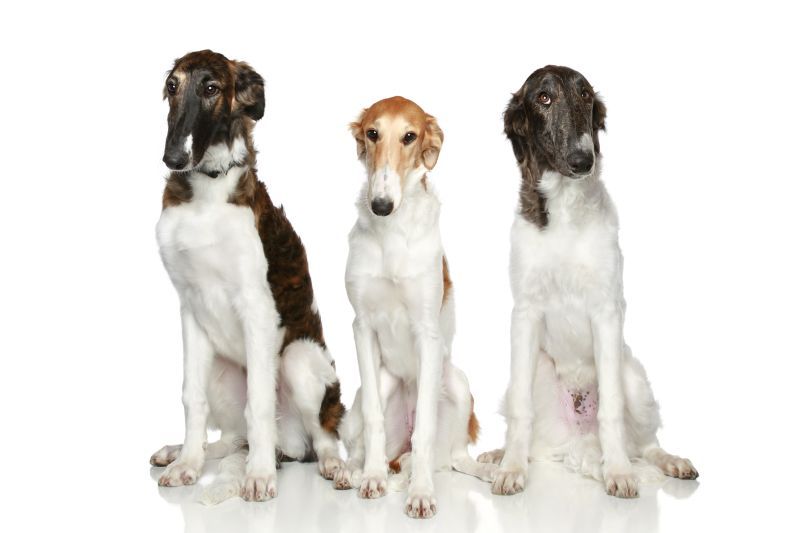
The juvenile puppy stage begins between 14 and 16 weeks of age and ends at the onset of puberty. During this time, puppies start to lose that very young puppy ‘look’ and more closely resemble a smaller version of their future adult selves.
Puppy’s body
- Puppies become mouthy, as from 4 months baby teeth start falling out and are replaced by adult teeth
- Teething and related chewing (and chewing issues!) occur
- They can hold longer in-between toilet breaks as their bladders are bigger, making toilet training easier
- The growth plates are starting to close for small breeds
- Sexual maturity is developing, making this a good time to spay or neuter your puppy
- Motor skills are similar to adults by the age of six months
- Medium to large breeds will reach about half their adult height by the end of the fourth month
- Toy and small breeds will almost complete their growth by the end of the sixth month
Expert advice from Dr Felicia:
Ages for desexing vary according to breed and any anatomical considerations your pet may have. For female dogs with recessed vulvas delaying desexing may be recommended, and large breed dogs are usually desexed much later compared to small breeds. Occasionally delayed desexing can cause undesirable behaviours associated with adolescent hormones, so your vet will be able to help you consider what is most appropriate for your pet’s personality, breed and your lifestyle.
Puppy socialisation
During the juvenile stage, puppies start to understand their role in the pack and pick up more and more cues. Just like human children, dogs in this puppy development stage are most influenced by their playmates — both dogs and people – and are beginning to understand rank, submission and dominance.
Well-socialised puppies will feel comfortable with people and other animals and will begin initiating interaction with them. Continued socialisation is necessary throughout the juvenile period to reinforce previous positive socialisation experiences, otherwise these will be forgotten.
Puppies in the juvenile stage begin to demonstrate independence and exploratory behaviour. However, another fear period can occur at around 4 months of age, so be sure to keep your puppy safe on the lead.
Puppy training
This puppy stage is the best time continue building on your puppy’s training, as he is now at his peak learning ability. However, he has a short attention span and can become easily excitable, so keep training short, consistent and fun. Your puppy can be actively taught by five months not to bite hard, and by six months to stop biting altogether.
Begin to practise recall, which can take some time to learn, but your persistence will pay off. Heavily reinforce good behaviour, giving rewards every time your pup comes to you when called.
Unsure how serious it is?
Bow Wow Meow policyholders can get access to trusted vet care anytime, anywhere, at no additional cost. Connect to an experienced Australian registered vet via video call, 24/7. Whether it’s providing vet advice, setting up at-home treatment plans, or confirming if you need to visit a vet in person, you can get help when you need it.
Find out more about our pet insurance cover options.
Puppy care tips
- Feeding: Puppies generally need to stay on puppy food until they reach adulthood, but they can usually drop down to 3 meals a day at the end of the third month.
- Exercise and play: By age 5 months, puppies can go on short walks. Make sure to keep your puppy close by when outdoors and when walking as they become progressively less dependent on you.
- Biting: Juvenile pupppies may still bite and chew a lot, so investing in some chewable toys can help to keep them occupied.
Adolescence – 6 to 18 months
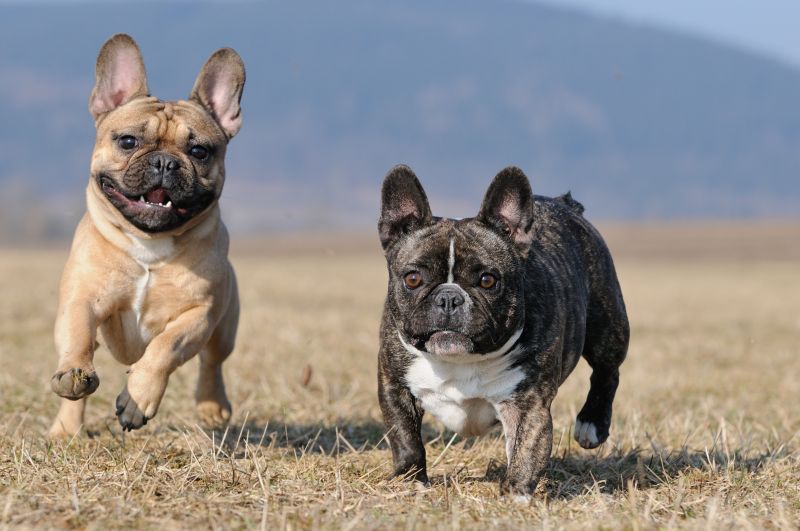
Adolescence begins when a puppy reaches puberty, which typically occurs between six months to one year of age. Puppies mature very quickly, and the smaller the breed, the faster they reach puberty. In small breeds, adolescence can start as early as 5 months. In larger breeds it can start as late as 9 or 10 months, and in very large breeds adolescence may not begin until 12 to 18 months. The duration of adolescence also depends on the breed size, lasting anywhere from a few months to a year.
Puppy body
- A female puppy will come into season for the first time, any time in the second half of her first year (commonly between 6 and 9 months), at which time she is able to mate and have puppies. It is a good idea to get your puppy desexed prior to this unless your vet recommends delaying desexing for medical reasons.
- Male dogs will often start showing an interest in females in the adolescent stage, at which time you can assume they can reproduce. It is your responsibility to make sure this doesn’t happen. Again, desexing is the best way to avoid this unless your vet recommends delaying desexing for medical reasons.
- By about seven months, adult teeth will replace the milk teeth.
- All growth plates close off and puppy is ready for more impact activities like agility or jogging.
- The adolescent puppy’s brain is fully developed and has the learning capacity of an adult dog.
- By the end of this stage, dogs have reached their full body weight and height (see puppy growth charts by breed size below).
Puppy socialisation
This stage is all about testing boundaries and challenging behaviours, some of which may include:
- aggression
- excessive energy
- short attention span
- poor socialisation
- disobedience
- wandering
- leg cocking (males); and
- obsessive mounting behaviour
Adolescent dogs that were fully socialised as puppies may again become fearful. Continue providing positive socialisation experiences and using positive reinforcement and consistent guidelines to help prevent later behavioural problems. Practice makes permanent, so it is wise to continue providing positive socialisation experiences for your dog from puppyhood onwards.
Your puppy now understands that he has a “pack” (which may consist of both humans and dogs) and his behaviour will be most influenced by this group. You can expect that he will challenge you and other animals more as he explores dominance and his role in the pack. When he challenges or is challenged by another dog, a scuffle will often break out. As soon as one has established itself as ‘top dog’, the fight usually ends in a few seconds, without resulting in injury. This is part of adolescence and is all about learning the rules. If you keep your adolescent puppy apart from other dogs, he will grow up frustrated and poorly socialised.
Puppy training
Your adolescent puppy can appear to have forgotten everything he has learned in the previous puppy stages, and behavioural issues may start to show. After all the hard work you’ve put into his training thus far, the adolescent puppy stage can be a frustrating time. It is important to realise that this is a normal part of puppy development and that it will pass only too quickly.
Adolescence is the time to keep working on every aspect of his training, give him consistent guidelines and lots of praise and rewards to boost his self-esteem while allowing him to work off some of his extra energy. Regular training during this stage is very beneficial.
Because it is difficult to predict the costs of veterinary care, it can help to have measures in place to help prepare for the unexpected. Pet insurance can help by covering a portion of the eligible vet bill if the unexpected does happen.
Get a quote for 2 months free pet insurance for your puppy or kitten in their first year.
Puppy care tips for this stage
- Biting and chewing: A second chewing stage will likely begin somewhere between 7 to 9 months. Properly socialised puppies will “mock bite” without causing injury; however, if a dog does injure another dog or a person, seeking services of a dog trainer may help to teach your dog to know what is socially appropriate.
- Feeding: By the seventh month puppies should be offered two full meals per day.
- Neutering: Dogs that aren’t spayed or neutered will start exhibiting sexual behaviour during this period, and females are often neutered once their first season is complete.
- Exercise: Frequent walks will satisfy their curiosity and urge to explore. By 9 months they are ready for more strenuous activity and sports.
Adult – all grown up
Adulthood can commence any time from one year for smaller breeds up to between 18 and 24 months for large and giant breeds. There are three aspects of puppy development that need to occur for a dog to be considered an adult:
- Physical maturity: This is reached at different ages, depending largely on the size of the dog. Little dogs stop growing much sooner than big dogs (see puppy growth charts by breed size below).
- Sexual maturity: Most puppies reach sexual maturity before they are fully grown, especially the larger breeds which have longer and slower growth periods.
- Mental maturity: Puppyish behaviour such as ‘silliness’ and ‘excitability’ can persist well into the second year, and many dogs are not fully mentally mature before they are two years old.
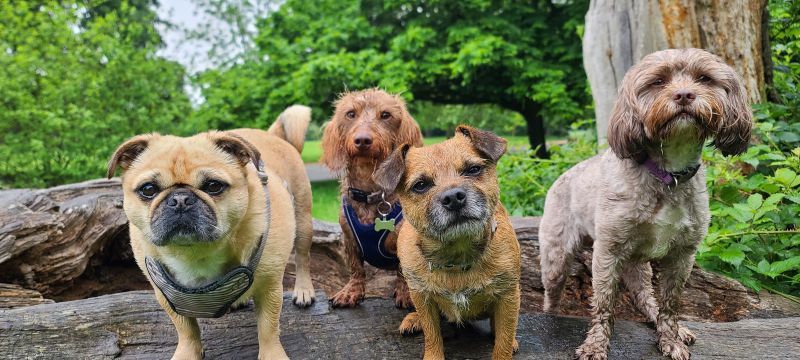
Your puppy needs to reach all three aspects of maturity before it is truly considered an adult. However, these processes don’t happen at the same rate, and the point at which all three are achieved varies from one dog breed to another. The second birthday is a major milestone in this respect, and the point at which most dogs are considered adult. The mature adult dog is much calmer and more self-controlled than the energetic and challenging adolescent.
Puppy growth chart
During the various stages of puppy development, you may wonder how much your puppy should weigh and whether he or she is growing and putting on weight appropriately. Unfortunately, there isn’t an exact answer to these questions, the reason being that not all puppies are the same, especially if you compare a tiny Chihuahua to its very much larger relative, the St. Bernard! Dogs vary considerably in their growth rates, as well as in the final size that they are likely to reach.
The most significant differences in growth rates and patterns is between dogs of different breed sizes. In the puppy growth charts below, you can see just how much more extreme the growth rate of larger dogs is, and for how much longer they carry on growing. The general rule is the larger the dog, the longer he will grow for.
Of course, there can also be wide variations between animals of the same breed, that can be quite significant in adult dogs from the larger breeds, but less obvious in smaller breeds and very young puppies. Gender also plays a role in determining weight and height, with male dogs usually a little heavier and larger than female dogs of the same age and breed.
One way to estimate how big your puppy will be as an adult is to look at where he lies on a general growth curve for his breed:
Weight charts by breed size
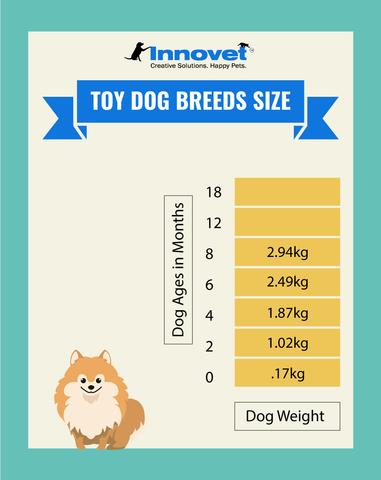
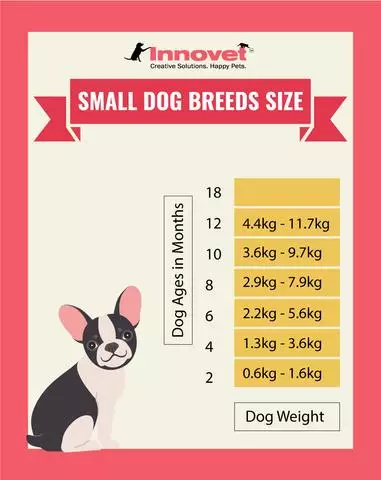
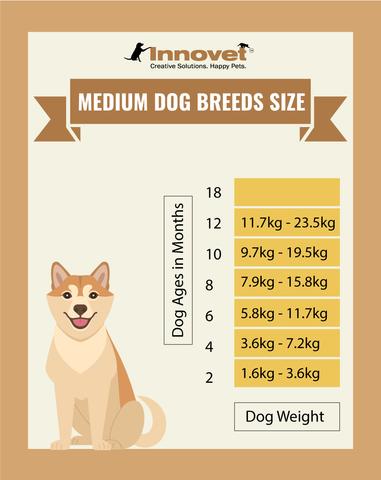
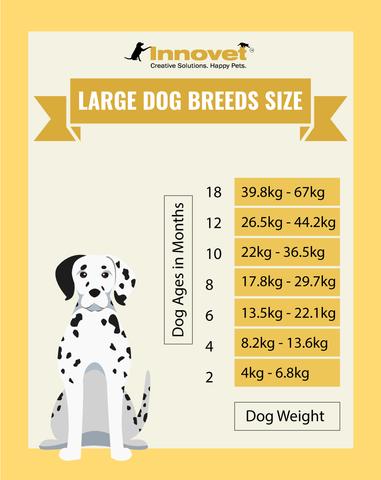
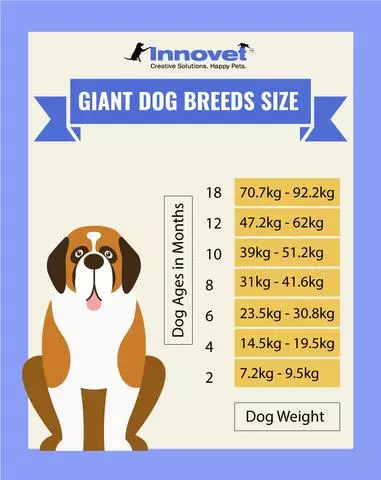
While we cannot predict exact weights at any of the main puppy development stages, the charts below will give you an idea of what you might expect your puppy to weigh at different stages in his development, depending on whether his breed size is toy, small, medium, large, or giant.
Toy breeds weight chart
Examples of toy dog breeds include: Chihuahua, Italian Greyhound, Toy Poodle, Brussels Griffon, Miniature Dachshund, Miniature Pinscher, Miniature Fox Terrier, Papillon, Pekingese, Pomeranian, Yorkshire Terrier
Small breeds weight chart
Examples of small dog breeds include: Australian Terrier, Basenji, Bichon Frise, Border Terrier, Boston Terrier, Brussels Griffon, Cairn Terrier, Cavalier King Charles Spaniel, Cavoodle, Chihuahua, Dachshund, Fox Terrier, French Bulldog, Havanese, Italian Greyhound, Jack Russell Terrier, Japanese Spitz, Lhasa Apso, Maltese, Maltese Shih Tzu, Miniature Bull Terrier, Miniature Dachshund, Miniature Pinscher, Miniature Poodle, Miniature Schnauzer, Moodle, Papillon, Pekingese, Pomeranian, Pug, Scottish Terrier, Shih Tzu, Welsh Corgi, Welsh Terrier, West Highland White Terrier, Yorkshire Terrier
Medium breeds weight chart
Examples of medium dog breeds include: American Bulldog, American Staffordshire Terrier, Australian Cattle Dog, Australian Kelpie, Beagle, Border Collie, British Bulldog, Bull Terrier, Cavoodle, Chow Chow, Cocker Spaniel, Dalmatian, Irish Terrier, Old English Sheepdog, Portuguese Water Dog, Schnauzer, Schnoodle, Shar Pei, Shetland Sheepdog, Soft-Coated Wheaten Terrier, Spoodle (Cockapoo), Springer Spaniel, Staffordshire Bull Terrier, Whippet
Large breeds weight chart
Examples of large dog breeds include: Airedale Terrier, Alaskan Malamute, Australian Bulldog, Australian Shepherd, Basset Hound, Boxer, Collie (Rough), Doberman, English Pointer, German Shepherd, German Short Haired Pointer, Golden Doodle (Groodle), Golden Retriever, Greyhound, Hungarian Vizsla, Irish Setter, Labradoodle, Labrador, Pitbull Terrier, Poodle, Rhodesian Ridgeback, Rottweiler, Samoyed, Siberian Husky, Weimaraner
Giant breeds weight chart
Examples of giant dog breeds include: Akita, Bernese Mountain Dog, Boerboel, Bullmastiff, Cane Corso, Dogue De Bordeaux, Great Dane, Great Pyrenees, Giant Schnauzer, Irish Wolfhound, Leonberger, Newfoundland, Scottish Deerhound, St. Bernard
Find out more with our helpful Puppy Resources!
- Download our Puppy Guide – 36 pages jam packed full of helpful tips for all new puppy parents.
- Still looking for the perfect puppy? Check out our puppy buyer’s guide to learn who to trust, and which sellers to better stay away from.
- Puppy arrival without stress: Check out our puppy arrival equipment checklist and our top tips on bringing a new puppy home (incl. puppy proofing your home).

How old is your dog in human years?
Contrary to popular belief, it’s not simply a matter of multiplying by 7!
Use our handy Dog Age Calculator, which factors in breed size-specific life expectancy data, to find out your dog’s comparative human age.
Bow Wow Meow Pet Insurance can help protect you and your dog should an unexpected trip to the vet occur.
-
Find out more about our dog insurance options
-
Get an online pet insurance quote
Bow Wow Meow is proud to have been awarded winner of Canstar’s ‘Most Satisfied Customers’ Award in the Pet Insurance category for both 2024 and 2025!
Bow Wow Meow is proud to be the only Pet Insurer that has been awarded Product Review’s Top Rated Pet Insurance every year from 2018 to 2026! This is based on 3,193 independent customer reviews (as at 09/04/2026), with an overall rating of 4.5 stars.

We also have the following ratings on other review platforms:
Google Review rating of 4.5 stars (based on 1,358 reviews)
Trust Pilot rating of 4.6 stars (based on 555 reviews)
Bow Wow Meow has been chosen as Winner of 4 categories in the 2026 Finder Pet Insurance Customer Satisfaction Awards!




– Most Trusted Pet Insurance
– Easiest to Claim Pet Insurance
– Most Recommended Pet Insurance
– Legendary Service Pet Insurance
We also received Highly Commended Awards for Loved Brand Pet Insurance and Best Value Pet Insurance.
Bow Wow Meow is an Australian-owned and operated pet insurance provider. Our focus is purely on pets, and we are proud to have helped provide peace of mind to over 200,000 Aussie pet owners since 2008.